


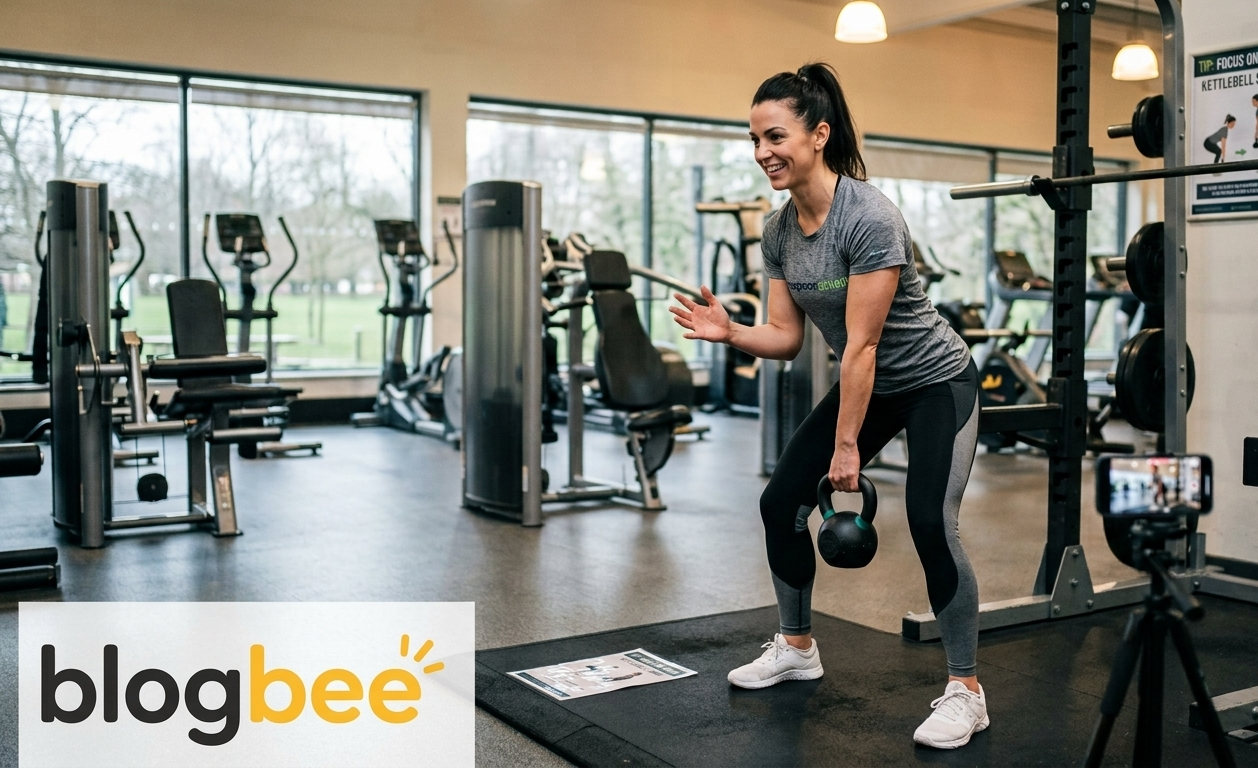
croll through enough fitness content online and you’ll eventually run into the phrase thespoonathletic fitness tips, usually attached to advice that promises balance instead of burnout. Rather than repeating the same generic checklist you’ve seen a hundred times, this article focuses on the parts of that advice that actually change daily behavior, goal setting, habit building, meal timing, supplement basics, and the mindset shifts that determine whether any of it sticks past the first two weeks. If you’ve tried fitness plans before and quit by week three, this is written for you specifically.
Setting Goals That Actually Hold Up Under Real Life
Most fitness plans fall apart at the goal-setting stage, long before anyone even picks up a dumbbell. Vague intentions like “I want to get in shape” don’t give you anything to measure or adjust, which means you have no way of knowing if what you’re doing is working until months have passed and frustration has already set in. A more useful starting point involves picking something specific enough that you could describe it to another person and they’d immediately understand exactly what success looks like. Thespoonathletic Fitness Tips are the real life changing tips and many people have transform their live by following Thespoonathletic Fitness Tips.
The classic SMART framework gets used a lot for a reason, and it holds up well here. Specific means naming the actual outcome, like increasing your squat by twenty pounds rather than just “getting stronger.” Measurable means you can track it with numbers, whether that’s reps, weight, minutes, or pounds. Achievable means the target respects where you’re actually starting from rather than where you wish you were, and time-bound means giving yourself an actual deadline instead of an open-ended someday. A goal like “increase my deadlift by 15% in twelve weeks” gives you something to plan backward from, which a vague resolution never does.
What tends to get missed is that goals need occasional revision, not just tracking. Life circumstances change, injuries happen, work gets busy, and a goal that made sense in January might need adjusting by March. This isn’t a failure of willpower, it’s just how real life interacts with any long-term plan. The people who stick with fitness longest tend to treat their goals as living documents they revisit every few weeks rather than a fixed target they either hit or feel guilty about missing. If you want to transform your life, do follow the Thespoonathletic Fitness Tips today.
Building Habits That Don’t Depend on Motivation
Motivation is an unreliable fuel source, and anyone who’s tried to rely on it for months at a time already knows this. It shows up strong for the first week or two of a new program and then quietly disappears right around the point when you actually need it most. Many people are trying Thespoonathletic Fitness Tips and getting postive results by following Thespoonathletic Fitness Tips. This is exactly why habit-based thinking tends to outperform motivation-based thinking for anyone trying to build a sustainable fitness routine.
The practical version of this looks like scheduling workouts the same way you’d schedule a work meeting, at a fixed time, treated as non-negotiable rather than optional depending on how you feel that day. Starting small matters here too. Committing to twenty minutes of movement daily, regardless of intensity, tends to build consistency far faster than an ambitious ninety-minute program that feels impossible to maintain once the initial excitement fades. Once the smaller habit is locked in, it’s much easier to expand it than it is to sustain an overly ambitious plan from day one. To transform your whole life Thespoonathletic Fitness Tips are the keys.
Tracking plays a bigger role in habit formation than people usually give it credit for. A simple log, whether it’s a notebook, a spreadsheet, or a basic app, gives you visible proof of consistency even on days when you don’t feel like progress is happening. Seeing three consecutive weeks of completed workouts on paper carries a different kind of motivational weight than just trusting your memory, which tends to exaggerate both good streaks and bad ones. Many things are involve in Thespoonathletic Fitness Tips you would easily know after reading this article about Thespoonathletic Fitness Tips. This kind of tracking also makes it much easier to spot patterns, like noticing you consistently skip Friday workouts, so you can adjust your schedule instead of repeating the same cycle of guilt every week.
Meal Timing and Simple Nutrition Without the Overwhelm
Nutrition advice gets needlessly complicated most of the time, buried under conflicting rules about meal timing, macro ratios, and food combinations that change depending on which corner of the internet you’re reading. The simplified version that tends to actually work focuses on a much shorter list, eating enough protein throughout the day, choosing whole foods most of the time, and paying attention to when you eat around your workouts rather than obsessing over exact timing windows. Thespoonathletic Fitness Tips are what people are trying these days rather than traditional old tips.
Protein deserves specific attention because it directly supports the muscle repair that happens after strength training. Spreading protein intake across three or four meals tends to work better for muscle repair than loading it all into one large dinner, since your body can only use so much at once for tissue repair. Practical sources like eggs, chicken, fish, beans, and Greek yogurt don’t require any special preparation or supplement purchases, they just require a bit of planning so you’re not scrambling to figure out dinner at eight at night.
Meal timing around workouts matters more for performance than most casual exercisers realize, but it doesn’t need to be treated like a science experiment. Eating a balanced meal with some carbohydrates and protein roughly two to three hours before a workout tends to provide steady energy without the sluggishness that comes from eating too close to training time. After a workout, getting protein and some carbohydrates within a couple of hours supports recovery, though the exact timing window is more flexible than older fitness advice used to suggest. Thespoonathletic Fitness Tips you should try if you are willing to spend a healthy life style. The bigger picture matters more than precision here, since consistently eating reasonably well across the week outweighs any single perfectly timed meal.
Supplement Basics Without the Marketing Hype
Supplements are one of the most oversold categories in the entire fitness industry, and it’s worth separating what’s actually backed by decent evidence from what’s mostly clever marketing. A small handful of supplements have reasonably strong research behind them for general fitness goals, including whey protein for meeting daily protein targets, creatine monohydrate for supporting strength and power output, and a basic multivitamin for filling occasional nutritional gaps rather than replacing whole foods entirely. Thespoonathletic Fitness Tips are the best tips.
What matters more than which specific product you buy is understanding that supplements are exactly what the name implies, an addition to an already solid foundation rather than a replacement for one. No amount of creatine or protein powder will compensate for inconsistent training, poor sleep, or a diet built mostly around processed food. Treating supplements as the missing piece of the puzzle, rather than a small optimization layered on top of the basics, is one of the more common and expensive mistakes people make early in a fitness journey.
It’s also worth being honest that supplement needs vary quite a bit based on individual factors like diet, training volume, and existing health conditions, which is exactly why checking with a healthcare provider before adding anything new to your routine is a reasonable step rather than an overly cautious one. Someone eating a high-protein diet from whole foods might not need a protein powder at all, while someone with a demanding training schedule and a busier lifestyle might find it genuinely convenient. There’s no universal answer here, just a general principle that the fundamentals should come first and supplements should stay secondary.
Mental Resilience and Staying Consistent Long Term
The mental side of fitness rarely gets the same attention as workout plans and meal prep, but it’s often the actual deciding factor in whether someone sticks with a routine for years or quits within a few months. Comparison tends to be one of the biggest silent killers of motivation, especially now that social media makes it easy to measure your week three progress against someone else’s year three results. Recognizing that everyone’s starting point, genetics, and circumstances are different isn’t just a nice sentiment, it’s a practical tool for staying focused on your own trajectory instead of getting discouraged by an unfair comparison.
Setbacks are also something worth planning for rather than being surprised by. Missing a week of workouts due to illness, travel, or just a rough patch at work doesn’t erase previous progress the way it can feel like it does in the moment. The people who maintain long-term consistency tend to treat a missed week as a minor detour rather than proof that the whole effort has failed, and they get back into their routine without needing to “make up” for lost time through excessive workouts that usually just lead to burnout or injury.
Small wins deserve more credit than they typically get too. Celebrating things like completing a planned week of workouts, adding five pounds to a lift, or simply choosing a healthier meal under a stressful day builds the kind of momentum that keeps people going long after the initial excitement of a new program fades. Fitness progress rarely feels dramatic in the moment, it’s usually a string of unremarkable days that only look impressive when you zoom out months later and compare where you started to where you ended up.
Frequently Asked Questions
What makes thespoonathletic fitness tips different from typical fitness advice?
Thespoonathletic Fitness Tips main distinction is an emphasis on sustainable habits and balanced routines over extreme programs, focusing on goal setting, simple nutrition, and mental consistency rather than short-term intense transformations.
How do I set a fitness goal that I’ll actually stick with?
Use a specific, measurable target with a realistic timeline, such as increasing a particular lift by a set percentage over twelve weeks, rather than a vague goal like “getting fit.”
Do I need supplements to see real fitness results?
No, supplements like protein powder or creatine can support progress, but consistent training, adequate protein from whole foods, and proper recovery are the actual foundation that determines results.
How important is meal timing around workouts?
It has some benefit, with a balanced meal a few hours before training and protein soon after, but overall weekly nutrition consistency matters more than precise timing windows.
What should I do if I miss a week of workouts?
Treat it as a minor interruption rather than a failure, and return to your normal routine without trying to compensate through excessive extra workouts, which often leads to injury or burnout.
How long does it typically take to see noticeable fitness results?
Many people notice initial changes within three to six weeks of consistent effort, though meaningful transformations generally build over several months of sustained habits.
You May Also Read: Blooket Bot

