


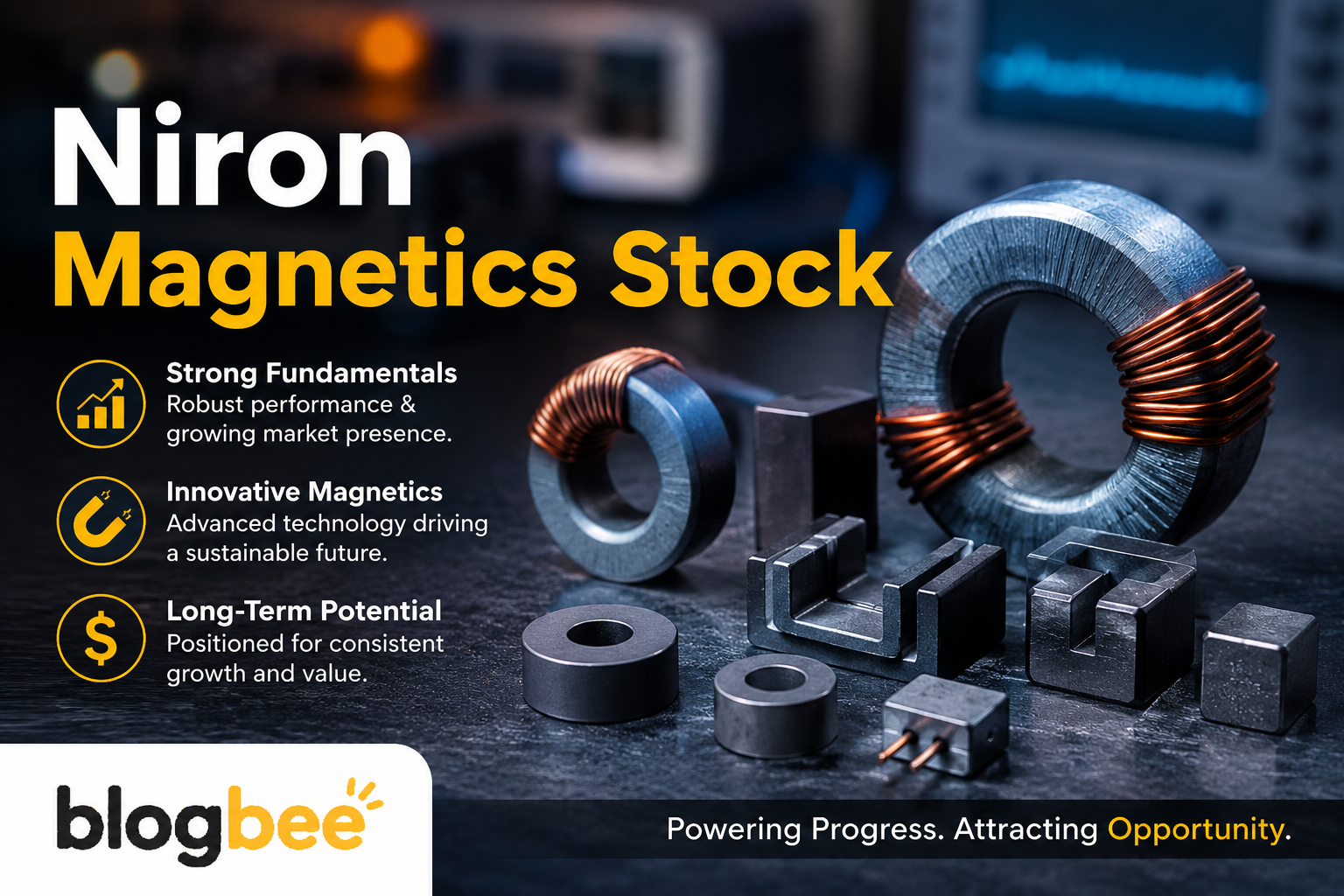
If you’ve been reading about the scramble to break free from Chinese rare earth supply chains, Niron Magnetics stock has probably crossed your radar, and it makes sense you’d want to know if you can actually invest. The short answer is more complicated than a simple yes or no, and understanding why matters before you go searching for a ticker symbol that doesn’t exist yet. Here’s a grounded breakdown of where Niron Magnetics stock actually stands, who can invest right now, and what to watch for going forward.
Before diving in, it’s worth being upfront that this article covers factual, publicly reported information about Niron Magnetics Stock rather than investment advice. I’m not a financial advisor, and decisions about private company investments carry real risk that deserves its own professional guidance.
What Is Niron Magnetics
Niron Magnetics stock is a Minneapolis-based advanced materials company that spun out of the University of Minnesota, developing what it describes as the first high-performance, rare-earth-free permanent magnets. The company was founded in 2014 by Jian Ping Wang and Frank Thibodeau, and its technology centers on iron nitride, a material formulation the company markets under the name Clean Earth Magnet technology. As of early 2026, the company reported roughly 148 employees, reflecting real, ongoing manufacturing and engineering operations rather than an early-stage research project.
The core pitch is straightforward once you understand the problem it’s solving. Most high-performance permanent magnets used in electric motors, wind turbines, and defense systems currently rely on rare earth elements, and the supply chain for those elements is heavily concentrated in China, creating real geopolitical and pricing risk for automakers, defense contractors, and clean energy companies. Niron’s iron nitride approach aims to sidestep that dependency entirely, using more abundant materials in what it describes as a closed-loop, lower-waste manufacturing process.
That positioning has attracted a notably strategic set of backers rather than purely financial investors. Companies like General Motors, Volvo Cars, Western Digital, Allison Transmission, and Samsung Venture Investment have all participated in funding rounds, alongside government-linked sources like ARPA-E grant funding. When automakers and industrial manufacturers who would actually use this technology are putting money into a company, rather than just venture capital firms betting on a trend, that’s a meaningfully different signal than typical early-stage hype.
Can You Actually Buy Niron Magnetics Stock Right Now
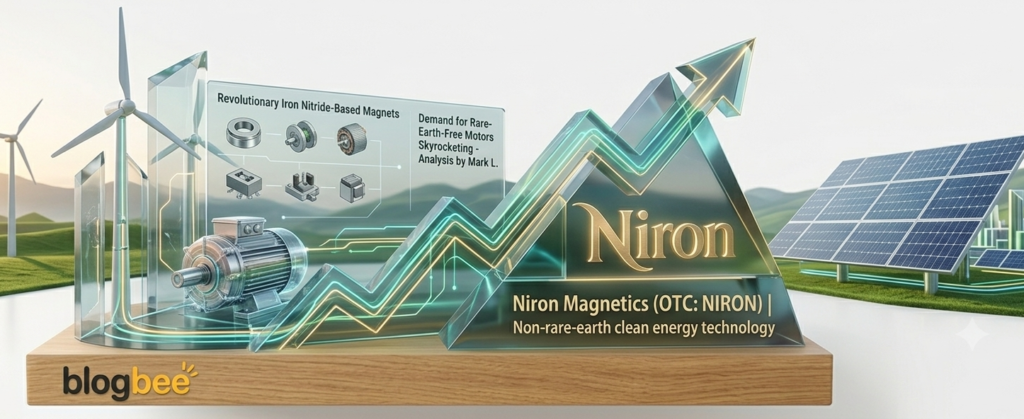
Here’s the direct answer, no, not through a normal brokerage account. Niron Magnetics stock is a privately held company, and it is not listed on the NYSE, NASDAQ, or any public stock exchange. There is no ticker symbol, no public share price, and no way to buy shares the way you would with a publicly traded company like Ford or Tesla through a standard trading app.
This surprises some people who search “Niron Magnetics stock” expecting to find a straightforward buy button, but it’s a completely normal situation for a company at this stage. Fast-growing, capital-intensive technology companies often stay private for years, sometimes over a decade, while they scale manufacturing and prove out their technology, since going public brings regulatory reporting requirements and public market pressure that many companies prefer to avoid until they’re further along.
What does exist is a secondary market for pre-IPO shares, accessible specifically to accredited investors, meaning individuals or institutions that meet specific income, net worth, or professional certification requirements set by securities regulators. Platforms like Forge Global, EquityZen, and Hiive facilitate these secondary trades, essentially connecting existing shareholders, often early employees or venture investors, who want liquidity, with accredited investors looking to buy in before any potential public listing.
How Niron Magnetics Stock Has Raised Money So Far
Niron Magnetics stock has raised more than $200 million across multiple funding rounds since its founding, according to data tracked by firms like Tracxn and PitchBook. Its funding history includes a Series D round in December 2023 that brought in roughly $90.6 million, led by Samsung Venture Investment, alongside participation from Allison Transmission. Earlier rounds included backing from General Motors Ventures, Volvo Cars, and Western Digital, reflecting the strategic, industry-aligned nature of its investor base.
Government and research-linked funding has also played a role, including grant funding tied to ARPA-E, the U.S. Department of Energy’s advanced research arm focused on energy technology. Grants like this typically go toward specific technical milestones rather than general operating capital, and their presence suggests Niron’s technology has attracted interest from public research funding bodies in addition to private capital.
More recently, reporting from Axios in March 2026 indicated that Niron Magnetics stock was preparing to raise approximately $500 million at an anticipated valuation between $2 billion and $3 billion, a substantial jump from earlier private valuations. It’s worth being precise here, this was reported as a round the company was preparing for at the time, based on sources familiar with the plans, rather than a confirmed, closed transaction, so treat the specific numbers as the most recent available reporting rather than a settled fact.
What Niron Magnetics stock Is Actually Worth
Because Niron Magnetics stock is private, there’s no single, universally agreed-upon valuation the way there would be with a public company’s market capitalization, which updates constantly based on trading activity. Instead, valuation estimates come from a mix of sources, primary funding round pricing, secondary market activity tracked by platforms like Forge, and third-party estimates from data providers.
Earlier data from Forge Global placed Niron’s post-money valuation at approximately $614 million as of early 2024, based on primary funding round data available at that time. That figure has clearly moved since then, given the later reporting around a potential $2 billion to $3 billion valuation tied to the anticipated 2026 raise. This kind of rapid valuation growth isn’t unusual for a company in a sector, like rare-earth-free materials, that’s suddenly become strategically important amid supply chain and geopolitical pressures around Chinese rare earth exports.
It’s worth understanding why these numbers can vary across different sources too. Valuation estimates from data providers like PitchBook, Tracxn, or CB Insights sometimes reflect different points in time, different funding round data, or different methodologies for estimating value between funding events. If you’re trying to track Niron’s valuation closely, checking the date on any figure you find matters just as much as the number itself.
How Accredited Investors Can Access Pre-IPO Shares
For investors who do meet accredited investor requirements, typically involving specific income thresholds, net worth minimums, or professional financial certifications, several platforms offer a path to purchasing existing Niron Magnetics stock shares on the secondary market. Forge Global, EquityZen, and Hiive all list Niron Magnetics stock among the pre-IPO companies available on their platforms, sourcing shares from existing shareholders like early employees or earlier-round investors looking for liquidity before any public listing occurs.
This kind of investment carries a different risk profile than buying public stock, and it’s worth understanding those differences clearly. Private company shares are illiquid, meaning there’s no guarantee you can sell quickly if you need to, pricing is less transparent than a constantly updating public market price, and there’s no guaranteed timeline for when, or if, the company will go public and provide a clear path to cashing out.
Beyond direct secondary market purchases, accredited investors can also gain indirect exposure through venture capital funds or investment syndicates that hold Niron Magnetics stock as part of a broader portfolio. This spreads risk across multiple companies rather than concentrating it in a single private holding, which is a meaningfully different risk approach than buying shares in one specific company directly.
Why Rare Earth Free Magnets Matter So Much Right Now
Understanding why Niron Magnetics has attracted this level of strategic investment requires understanding the broader rare earth supply chain problem. China currently dominates global rare earth element mining and processing, and that concentration has become an increasing source of concern for automakers, defense contractors, and renewable energy companies who depend on rare earth magnets for electric motors, wind turbine generators, and other critical components.
Export restrictions, pricing volatility, and broader geopolitical tension tied to this concentration have pushed companies to actively seek alternatives, and that’s exactly the gap Niron is positioning itself to fill. A viable, scalable, rare-earth-free magnet technology would meaningfully reduce that supply chain exposure for any industry relying on high-performance permanent magnets, which explains why companies like GM, Volvo, and Samsung have chosen to invest directly rather than simply watching from the sidelines.
This context matters for understanding Niron’s rising valuation too. The jump from a roughly $614 million valuation in early 2024 to reported talks around $2 billion to $3 billion just two years later reflects, at least in part, the growing strategic urgency around rare earth alternatives, rather than purely internal company milestones. Whether that valuation trajectory continues depends heavily on Niron’s ability to scale manufacturing and prove its technology works reliably at commercial volumes, which remains the central open question for the company.
Is There an IPO on the Horizon
As of the most recent available reporting, Niron Magnetics has not filed for an IPO, and no official public listing date has been set. Multiple sources tracking pre-IPO companies, including Forge Global and EquityZen, confirm this directly, and describe the eventual path to public trading as still speculative among analysts covering the deep tech and clean energy space.
It’s also worth understanding that an IPO isn’t the only route a private company like Niron could eventually take toward public markets. Alternatives include acquisition by a larger industrial partner seeking to integrate the technology directly, a merger with a special purpose acquisition company, or a direct listing rather than a traditional underwritten IPO. Each of these paths carries different implications for existing shareholders and potential future investors, and there’s currently no public indication of which direction Niron is most likely to pursue.
Given the scale of the reported 2026 fundraising activity and the strategic investor base already in place, it’s reasonable to expect that any eventual move toward public markets would be closely watched, but reasonable expectation isn’t the same as a confirmed timeline. Anyone specifically waiting for a Niron Magnetics IPO should treat any date rumors with real skepticism until the company or its underwriters make an official announcement.
What Retail Investors Can Do in the Meantime
For everyday retail investors who don’t meet accredited investor requirements, direct investment in Niron Magnetics currently isn’t available, and no amount of searching will turn up a legitimate way around that restriction, since accredited investor rules exist specifically to limit access to illiquid, higher-risk private securities. Be wary of any platform or offer claiming to sell Niron Magnetics shares to non-accredited investors, since that would fall outside standard securities regulations.
If gaining exposure to the broader rare-earth-alternative and advanced materials theme is the actual goal, some retail investors look toward publicly traded companies operating in adjacent spaces, such as established magnet manufacturers, materials science companies, or diversified industrial firms with stated rare earth alternative initiatives, though it’s worth researching any specific company’s fundamentals independently rather than assuming thematic similarity guarantees comparable performance.
The most realistic path for retail investors interested specifically in Niron Magnetics is simply patience, watching for official news about a public listing, acquisition, or other liquidity event, while recognizing that private company timelines are notoriously unpredictable and can stretch on for years beyond initial speculation. Following credible financial news sources directly, rather than relying on speculative blog content, remains the most reliable way to stay current if and when Niron’s public market status actually changes.
Frequently Asked Questions
Is Niron Magnetics stock publicly traded? No, Niron Magnetics is a privately held company and is not listed on any public stock exchange, so it has no ticker symbol and no public share price.
Can regular retail investors buy Niron Magnetics shares? Currently, no. Only accredited investors, who meet specific income, net worth, or professional certification requirements, can access Niron Magnetics shares through secondary marketplaces like Forge Global, EquityZen, or Hiive.
What is Niron Magnetics currently worth? Valuation estimates have varied significantly over time, from roughly $614 million in early 2024 based on Forge Global data, to reported talks around a $2 billion to $3 billion valuation tied to a fundraising round in preparation as of March 2026, according to Axios reporting.
Has Niron Magnetics filed for an IPO? No, as of the most recent available reporting, Niron Magnetics has not filed for an IPO, and no official public listing date has been announced.
Who are Niron Magnetics’ major investors? Investors include Samsung Venture Investment, General Motors Ventures, Volvo Cars, Western Digital, and Allison Transmission, alongside government-linked grant funding through programs like ARPA-E.
What does Niron Magnetics actually make? Niron Magnetics develops rare-earth-free permanent magnets using iron nitride technology, targeting applications including electric motors, generators, industrial equipment, and defense systems, as an alternative to magnets that depend on rare earth elements.
You May Also Read: IronMartOnline Reviews

